Greens Section
Greens
I developed the cut greens planting program based on my time managing a CSA’s production. The idea is to have a near constant supply of fresh greens. Most of the cut greens are good to “cut and come again” allowing for 2-3 harvests, spread out over a couple weeks. Arugula, Lettuce Mix, Spinach and Ovation Greens Mix work together or separately to provide you with a delicious salad every day.
Similarly the head lettuce program supplies you with several heads of lettuce each month. By selecting both varieties of romaine or bibb, you will get head lettuce harvests continuously.
Three Kale varieties, Swiss Chard, Collards and Asian greens round out the greens section.
Spacing & Yield
On 30” beds, 4 rows of Arugula, Spinach, Allstar & Ovation Greens Mix can be grown in 4 rows, spaced 6” apart.
On 30” beds, 3 rows of Swiss Chard can be planted, spaced 1’ apart.
On 30” beds, 3 rows of Head Lettuces can be grown, spaced 1’ apart.
On 30” beds, 2 rows of Collard Greens & Pac Choi can be grown, 1’ apart.
On 30” beds, 2 rows of Tatsoi can be grown, 6” apart.
On 4’ beds, 6 rows of Arugula, Spinach, Allstar & Ovation Greens Mix can be planted 6” apart.
On 4’ beds, 3 rows of Head Lettuce can be planted, 8” apart.
On 4’ beds, 3 rows of Swiss Chard can be planted, 8” apart.
On 4’ beds, 3 rows of Pac Choi and Collard Greens can be planted, 1’ apart.
On 4’ beds, 3 rows of Tatsoi can be grown 6” apart.
Pest Control
Arugula, Ovations Greens mix, Tatsoi and Pac Choi are susceptible to flea beetles, floating row covers installed at time of planting is the best protection. Many other insects like to live in salad mixes.
I developed the cut greens planting program based on my time managing a CSA’s production. The idea is to have a near constant supply of fresh greens. Most of the cut greens are good to “cut and come again” allowing for 2-3 harvests, spread out over a couple weeks. Arugula, Lettuce Mix, Spinach and Ovation Greens Mix work together or separately to provide you with a delicious salad every day.
Similarly the head lettuce program supplies you with several heads of lettuce each month. By selecting both varieties of romaine or bibb, you will get head lettuce harvests continuously.
Three Kale varieties, Swiss Chard, Collards and Asian greens round out the greens section.
Spacing & Yield
On 30” beds, 4 rows of Arugula, Spinach, Allstar & Ovation Greens Mix can be grown in 4 rows, spaced 6” apart.
On 30” beds, 3 rows of Swiss Chard can be planted, spaced 1’ apart.
On 30” beds, 3 rows of Head Lettuces can be grown, spaced 1’ apart.
On 30” beds, 2 rows of Collard Greens & Pac Choi can be grown, 1’ apart.
On 30” beds, 2 rows of Tatsoi can be grown, 6” apart.
On 4’ beds, 6 rows of Arugula, Spinach, Allstar & Ovation Greens Mix can be planted 6” apart.
On 4’ beds, 3 rows of Head Lettuce can be planted, 8” apart.
On 4’ beds, 3 rows of Swiss Chard can be planted, 8” apart.
On 4’ beds, 3 rows of Pac Choi and Collard Greens can be planted, 1’ apart.
On 4’ beds, 3 rows of Tatsoi can be grown 6” apart.
- Cut Greens yield about ¼ - ½# per row foot per week, with a second or third harvest after re-growth.
- Bunch Greens produce a small bunch (~6 leaves) every week or two after re-growth.
- Head Lettuces produce one head per plant.
Pest Control
Arugula, Ovations Greens mix, Tatsoi and Pac Choi are susceptible to flea beetles, floating row covers installed at time of planting is the best protection. Many other insects like to live in salad mixes.
|
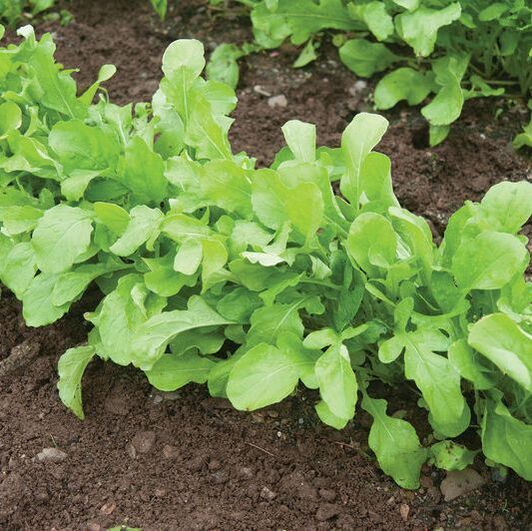
Arugula
30 Days Planting Notes: Spring Plantings in April and May for harvests in May and June, late-summer plantings in August and September for harvests in September and October. “The standard salad arugula. Long, dark, lobed leaves are suitable for salad mix or bunching.” |
|
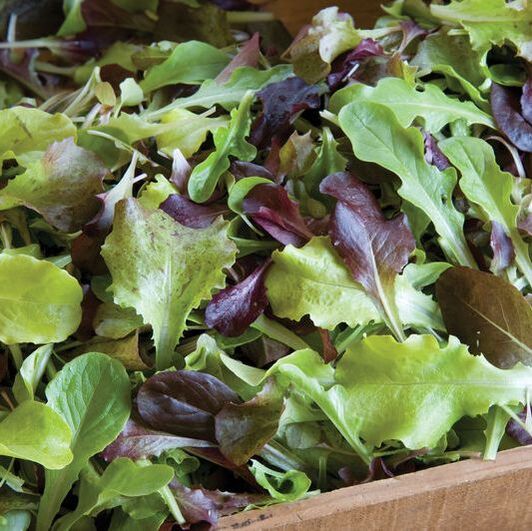
Allstar Greens Mix
28 Days Planting Notes: Spring Plantings in April and May for harvests in May and June, late-summer plantings in August and September for harvests in September and October. “Our most popular mix. Ruffled edges and unique leaf shapes provide loft, interesting texture, good shelf life, and fancy appearance. Includes green oakleaf, red oakleaf, green romaine, red romaine, lollo rossa, and red leaf lettuces.” |
|
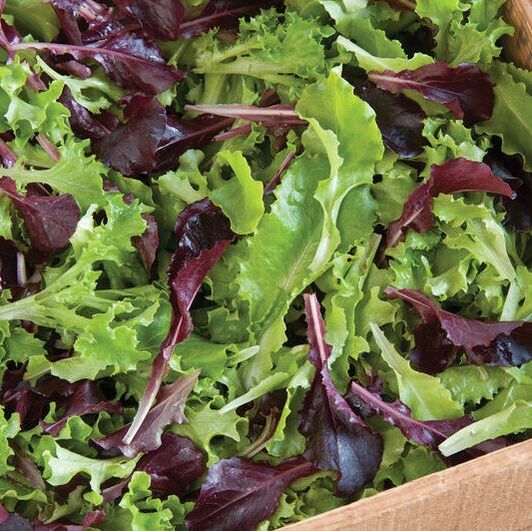
Five Star Greenhouse Lettuce Mix
35 Days Planting Notes: Planted in June and July for July and August harvests. “The components were selected for their uniform growth rates, ability to hold their color (especially red leaf varieties) and resistance to downy mildew. Includes green oakleaf, red oakleaf, red romaine, green leaf, and red leaf lettuces.” |
|
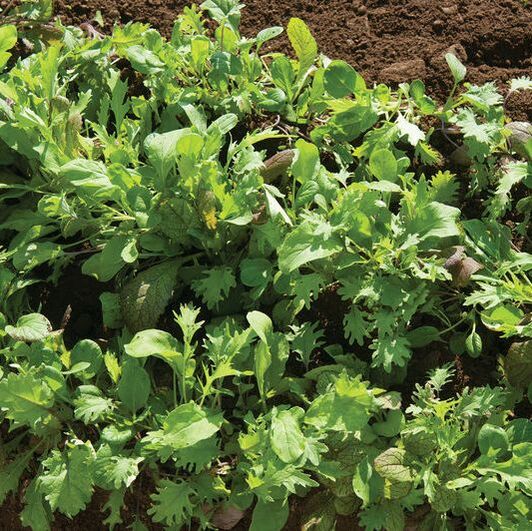
Ovation Greens Mix
21 Days Planting Notes: Can be planted monthly from April - September. “A great combination of both mild and spicy ingredients. This mix includes red mustard, mizuna, tatsoi, kale, and arugula.” |
|
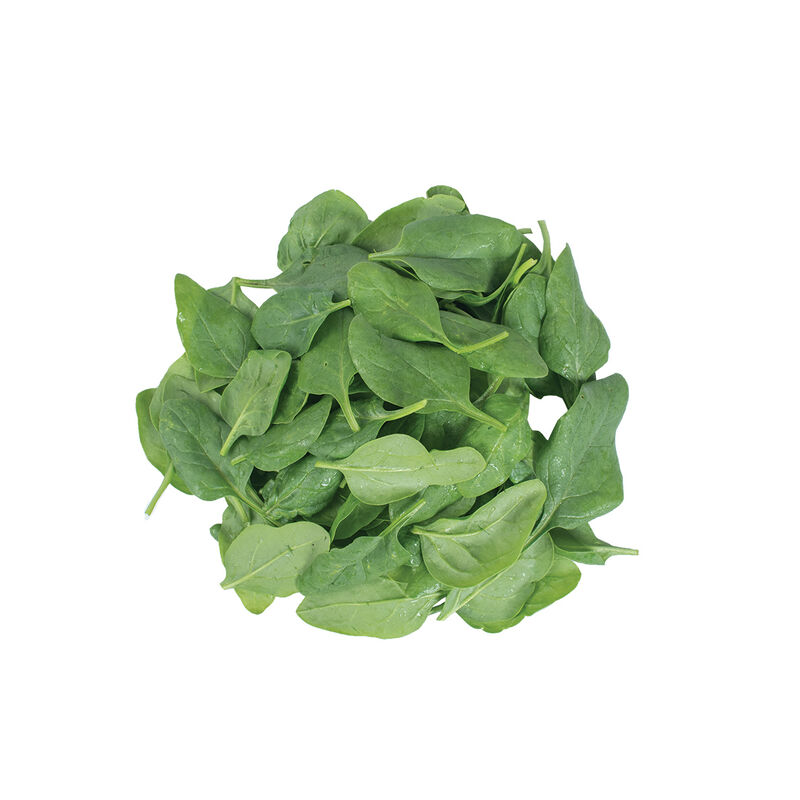
Space Spinach
25 Days Planting Notes: Can be planted monthly from April - September, excepting July. “Tried and true variety for all season. Fast Growing, medium leaves are smooth to slightly savoyed” |
|
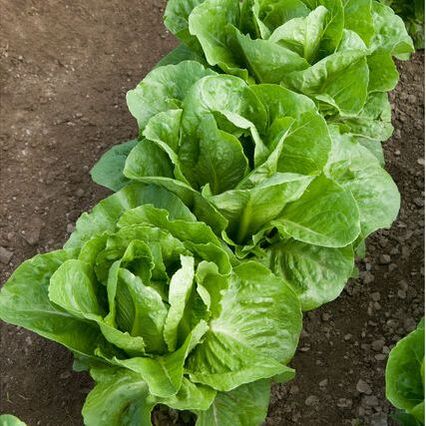
Coastal Star Romaine Lettuce
57 Days Planting Notes: Spring plantings in April and May for harvests in June and July, Fall plantings in August and September for harvest in October and November. “A longtime favorite. The large, heavy heads are dark green, sweet flavor.” |
|
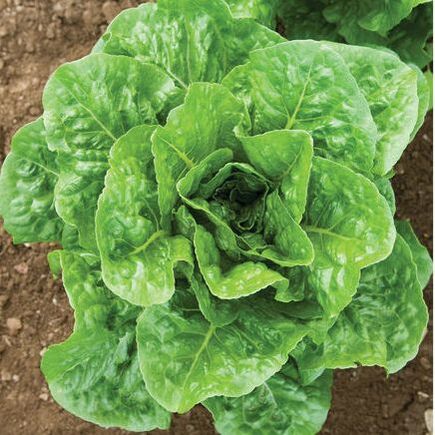
Salvius Romaine Lettuce
58 Days Planting Notes: Planted in June and July for harvests in August and September. “Bolt tolerant and widely adaptable. Medium green, upright plants. Open habit makes it more suitable for heads. Good flavor with a crisp texture.” |
|
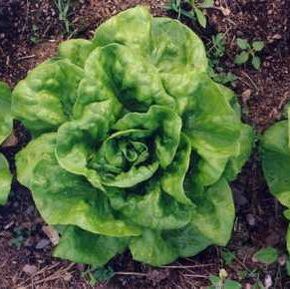
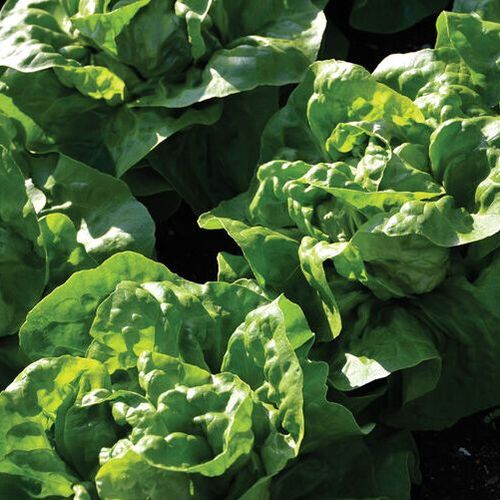
Buttercrunch Bibb Lettuce
52 Days Planting Notes: Spring plantings in April and May for harvests in June and July, Fall plantings in August and September for harvest in October and November. “…’the cucumber of lettuce, smooth and soothing with a green refreshing flavor.’ Dark green outer leaves with creamy center heart. New York market lettuce grower Lisa Bloodnick praises its ‘sweet, succulent broad mid-ribs.’” |
|
Adriana Bibb Lettuce
48 Days Planting Notes: Planted in June and July for harvests in August and September. “Heat tolerant dark green butterhead. Developed by the same talented breeder who gave us Ermosa, Adriana is large and has a broad disease package. Heads are full and dense with good flavor. Good tolerance to tipburn and bolting.” |
|
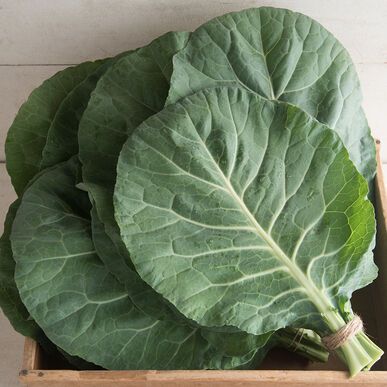
Flash Collard Greens
55 Days Planting Notes: Planted in April for harvests throughout the season “Vates-type hybrid. Very slow to bolt. Flash offers repeated harvests of dark green, smooth leaves. Very high yielding.” |
|
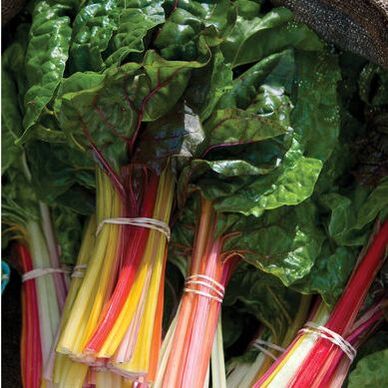
Bright Lights Swiss Chard
55 Days to First Harvest Planting Notes: Planted in April for harvests throughout the season “Lightly savoyed, green or bronze leaves with stems of gold, pink, orange, purple, red, and white with bright and pastel variations. Consistent growth rate and strong bolt resistance across all colors makes this a superior mix. “ |
|
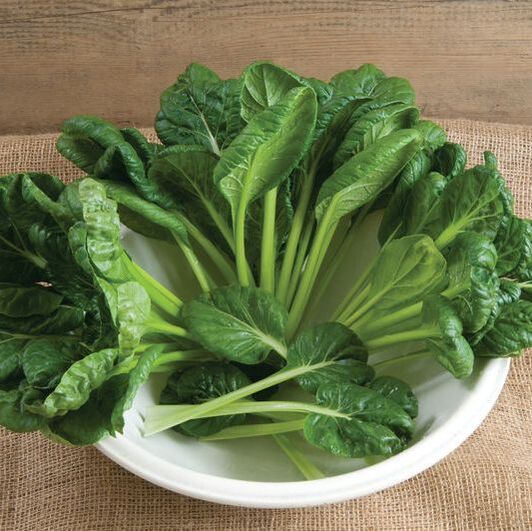
Tatsoi
45 Days Planting Notes: Planted May-September for harvests throughout the season. “Leaves form a compact, thick rosette. Long harvest period. Mild flavor for salads, stir-fries, etc.” |
|
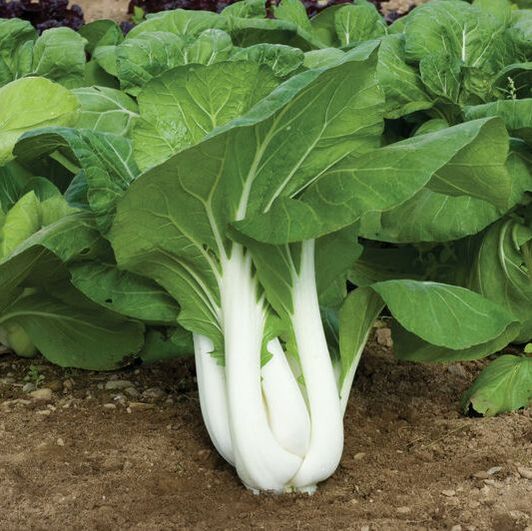
Joi Choi Pac Choi
50 Days Planting Notes: Planted April- August for harvests throughout the season. “Heavy, vigorous white-stem pac choi. Joi Choi forms a 12-15" tall, broad, heavy plant with dark-green leaves and thick, flattened white petioles. “ |
Kale
Kale is a full season staple. Get one plant in the spring; you will have it growing in the fall. One plant is enough for most families, but if you would like different types get more varieties!
Spacing & Yield
On 30” beds, 2 rows of Kale can be planted, 1’ apart; expect yields of 1 bunch (~6 leaves) every week or two.
On 4’ beds, 3 rows of Kale can be planted, 1’ apart; expect yields of one bunch (~6 leaves) every week or two.
Pests
Kale does not suffer badly much from pests. Tuscano is susceptible to cabbage loopers.
Kale is a full season staple. Get one plant in the spring; you will have it growing in the fall. One plant is enough for most families, but if you would like different types get more varieties!
Spacing & Yield
On 30” beds, 2 rows of Kale can be planted, 1’ apart; expect yields of 1 bunch (~6 leaves) every week or two.
On 4’ beds, 3 rows of Kale can be planted, 1’ apart; expect yields of one bunch (~6 leaves) every week or two.
Pests
Kale does not suffer badly much from pests. Tuscano is susceptible to cabbage loopers.
|
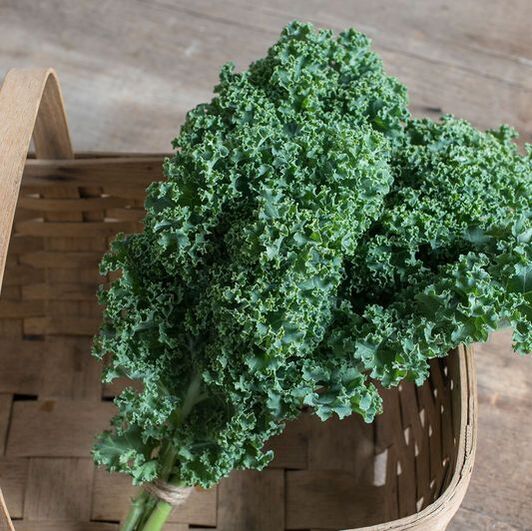
Darkibor Kale
75 Days to First Harvest Planting Notes: Planted in April for harvests throughout the year “Organic, curly green kale. Similar to Winterbor, Darkibor is just as tall, somewhat later to mature, and slightly less curled. The color is more of a medium green versus the darker and bluer green colors of Winterbor and Starbor. A sturdy kale, with tight curl and close internodes” |
|
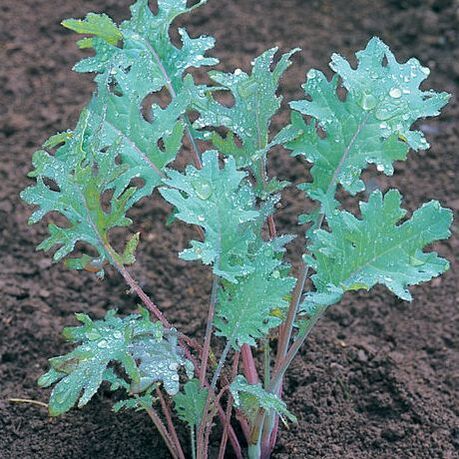
Red Russian Kale
60 Days to First Harvest Planting Notes: Planted in April for harvests throughout the year “Stems are purple; leaves are flat, toothed, and dark green with purple veins. The plants mature medium-tall and leaves are tender compared to other kales.” |
|
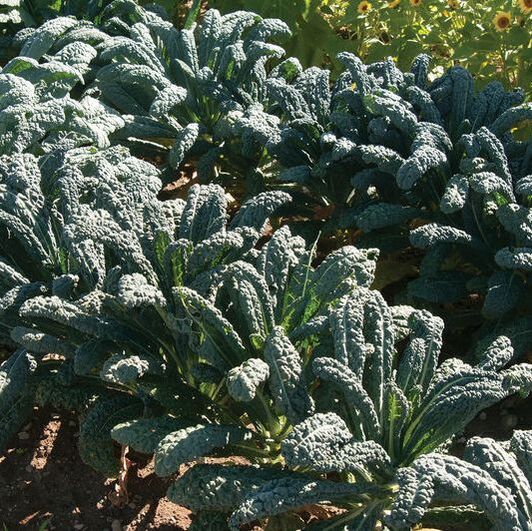
Toscano Kale
65 Days to First Harvest Planting Notes: Planted in April for harvests throughout the year “Italian heirloom. Lacinato or "dinosaur" type. Unique leaf type: extra-dark green, noncurled but heavily blistered (savoyed). Rich, tender leaves have a softer texture than curly green kales.” |